Elbow arthroscopy is a minimally invasive procedure used to diagnose and treat a range of elbow problems, including persistent pain, stiffness, locking, inflammation, or cartilage damage. Conditions such as tennis elbow, loose bodies, post-injury stiffness, and early arthritis can cause significant restriction in daily tasks, work activities, and sport. When physiotherapy, medication, or injections do not provide sufficient relief, elbow arthroscopy can help restore motion and reduce pain by addressing the underlying cause within the joint.
At One Orthopaedics, we provide elbow arthroscopy for patients across Guildford and Surrey, using advanced keyhole techniques to treat internal joint problems with precision. The procedure uses small incisions and specialised instruments, allowing faster recovery and less tissue disruption compared with open surgery. Treatment is individually planned based on symptoms, imaging findings, and functional goals.
What is elbow surgical release?
Elbow arthroscopy involves inserting a small camera into the joint through tiny incisions to allow careful visualisation and treatment of elbow conditions. It is commonly used to address:
- Loose bodies causing clicking or locking
- Stiffness from scar tissue or inflammation
- Tendon or ligament irritation
- Cartilage damage
- Early arthritis
- Synovitis or thickened joint lining
The procedure aims to improve movement, reduce pain, and restore comfortable daily and sporting activity.
Who Is It Suitable For?
Elbow arthroscopy may be recommended for individuals who:
- Experience persistent elbow pain or stiffness
- Have locking, catching, or clicking sensations
- Have loose bodies confirmed on imaging
- Struggle with sport or work-related elbow movements
- Have not improved with physiotherapy or injections
- Require precise diagnosis before further treatment
A consultant determines suitability based on examination and imaging such as X-ray or MRI.
How the Procedure Works
The procedure is performed under general anaesthetic. Small portals are created around the elbow to allow insertion of the camera and instruments. The joint is assessed, and problem areas are treated as needed.
Common steps include:
- Removing loose bodies
- Releasing tight scar tissue
- Smoothing cartilage defects
- Treating synovitis
- Addressing impingement or structural blockages
The minimally invasive approach reduces soft tissue trauma and supports quicker rehabilitation.
Recovery and Rehabilitation
Recovery varies depending on the condition being treated. Early movement is encouraged to prevent stiffness, with physiotherapy guiding safe progression.
Rehabilitation typically includes:
- Pain and swelling management
- Early range-of-motion exercises
- Gradual strengthening of forearm and elbow muscles
- Functional training for work or sport
- Return to full activity as symptoms improve
Many patients experience significant improvements in mobility and comfort within weeks.
Before and After Treatment
Before treatment, individuals may experience elbow pain, difficulty straightening or bending the arm, clicking or locking, reduced power, and limitations in work or sport.
After treatment, elbow arthroscopy aims to improve range of motion, reduce discomfort, and restore functional use. With structured rehabilitation, patients often return to normal activity with improved comfort and confidence.
Consultant Overview
Our specialists provide advanced diagnostic and surgical care for elbow conditions. Elbow arthroscopy is performed by experienced orthopaedic consultants supported by physiotherapy pathways for patients across Guildford and Surrey.
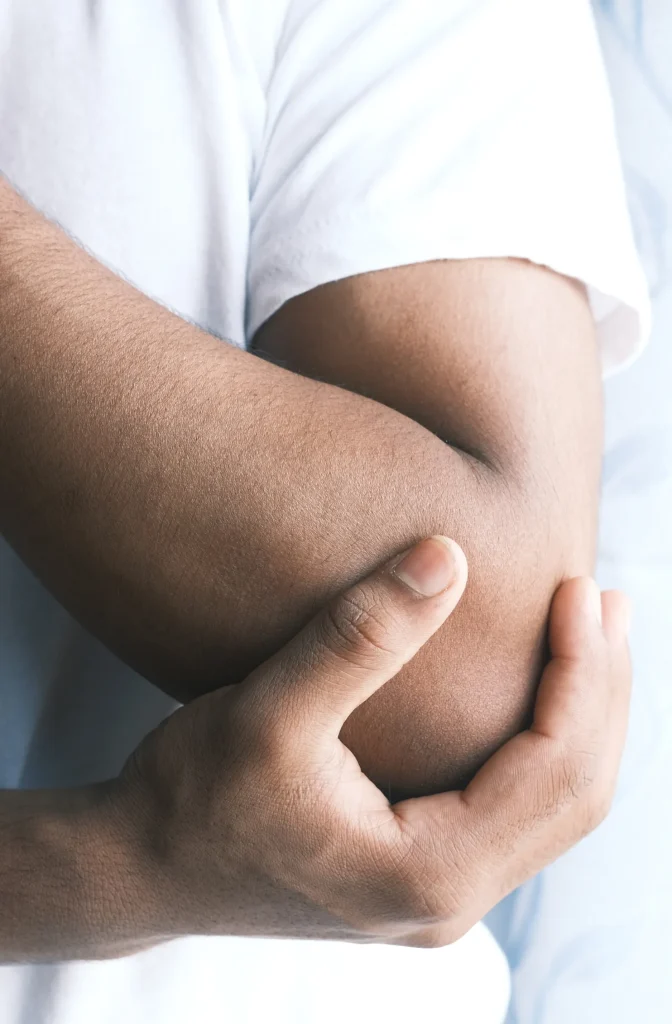
If it is discovered that the problems you experience are secondary to golfer’s elbow, surgical removal and reattachment of the flexor tendons may be considered. The skin incision will be closed using dissolvable stitches and covered with a dressing. The outer dressing may be removed after five days, but the sticky dressing underneath stays in place for two weeks while the skin heals.

Anthony Hearnden
Consultant Orthopaedic Surgeon FRCS (Tr&Orth), Shoulder, Elbow, Hand and Wrist

